General Concepts of KubeOpsVM
Categories:
2 minute read
This article explores the core concepts of KubeOpsVM, a virtualization solution that integrates with Kubernetes to manage virtual machines alongside containerized workloads. It highlights how KubeOpsVM bridges traditional VMs and cloud-native systems, offering scalability and streamlined orchestration for modern infrastructure.
What is the purpose of a Virtual Machine?
A virtual machine (VM) is a software-based environment that simulates a physical computer, enabling it to run an operating system and applications independently from the host machine. Its primary purpose is to optimize hardware usage by allowing multiple operating systems to run on a single device. This setup is crucial for tasks like software development, where developers can test applications in various environments without needing separate hardware.
Security and isolation are other key advantages, as VMs keep applications separate from the host system, reducing the risk of system-wide damage from potential threats. They also simplify disaster recovery, since entire VM states can be backed up, cloned, or transferred easily. Additionally, VMs provide flexibility by enabling cross-platform compatibility, allowing users to run different operating systems simultaneously. This feature supports legacy software that might not be compatible with modern systems, ensuring continued access to older applications.
Virtual machines are integral to cloud computing, IT infrastructure, and personal computing due to their scalability, flexibility, and efficiency.
How does KubeOpsVM work?
KubeOpsVM is like a “computer inside a computer.” It allows you to run an operating system (OS) and applications in a sandboxed environment, separate from your actual physical machine.
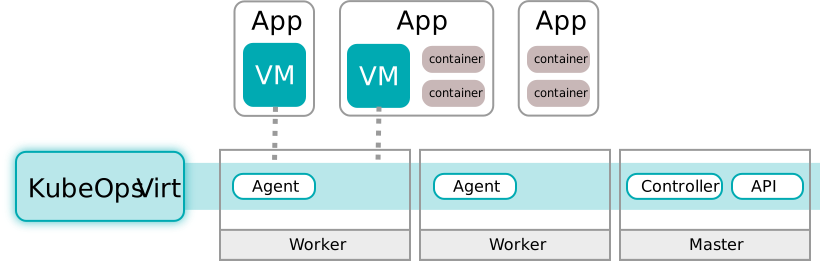
In the example shown, any VM can be hosted on any agent (worker or master) within the cluster.
A virtual machine does not necessarily have to run on a specific machine. Depending on the current requirements, the VM is deployed on the appropriate machine in the cluster. kubevirt takes over the complete administration - no further intervention is necessary.
One of the main advantages of KubeOps virtualization is the asynchronous use and access of a VM and the deployment and execution of the VM depending on the available resources or machines. This ensures that each VM can always work independently of workloads.